
Queen's University
Advanced Biomaterials Laboratory by Amsden Group
19 Division St room 201, Kingston, ON K7L 3L8, Canada
Cell-Biomaterial Interactions
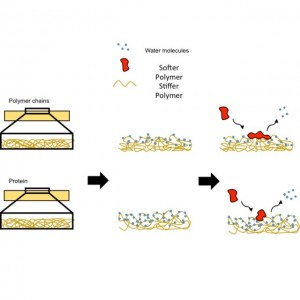
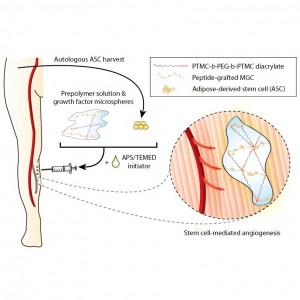
Cells are known to exhibit altered behavior in response to the stiffness of the material to which they are anchored, as well as to the nature of peptide ligands available for them to bind to. We are exploring the reasons behind this behavior and how it can be manipulated to alter macrophage response and stem cell differentiation and behaviour.
Influence of polymer chain flexibility on protein adsorption and subsequent cell response (left)
Cell delivery to treat critical limb ischemia (right)
Collaborators: Dr. Lauren Flynn (Western University) and Dr. David Hess (Western University)
Protein/ Peptide Delivery
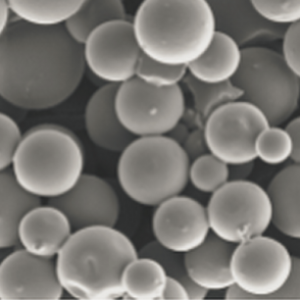
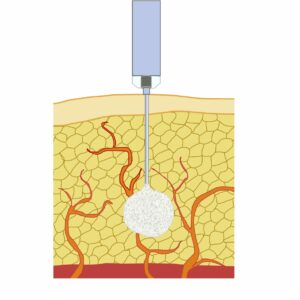
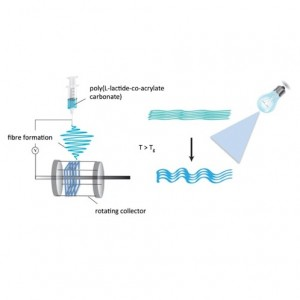
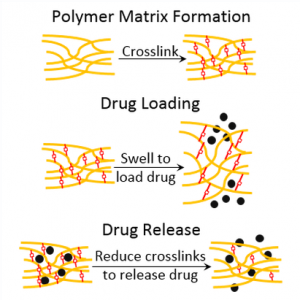
We are currently developing novel polymer formulations for the sustained and local delivery of peptides, growth factors, and small molecules for applications ranging from bone regeneration to therapeutic angiogenesis to ocular delivery.
Viscous liquid polymers for local pro-angiogenic growth factor delivery (left)
Collaborators: Dr. David Hess (Western University)
Phototriggerable polymers for ocular drug delivery (right)
Soft Connective Tissue Regeneration
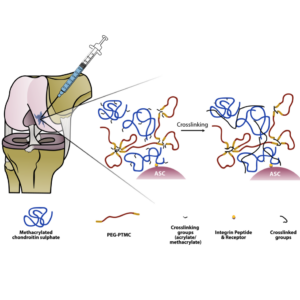
As part of the CONNECT! NSERC CREATE Program in Soft Connective Tissue Regeneration/Therapy we are currently developing adipose-derived stem cell based therapies to regenerate damaged articular cartilage, ligaments, the nucleus of the intervertebral disc, and adipose tissue.
Engineering adipogenesis for soft tissue regeneration (left)
Collaborators: Dr. Lauren Flynn (Western University)
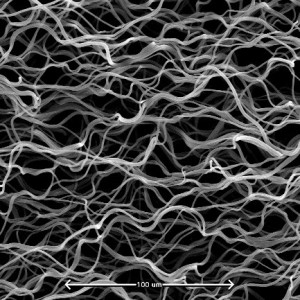
Biomimetic scaffold for Achilles tendon and anterior cruciate ligament engineering (right)
Collaborators: Dr. Davide Bardana (Orthopaedic Surgery, Queen’s University), Dr. Andrew Winterborn (Veterinarian, Queen’s University) and Dr. Lauren Flynn (Western University)
Synthesis of Biodegradable Polymers
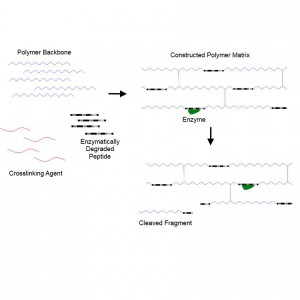
Utilizing a variety of monomer synthesis approaches primarily based on the preparation of functionalized monomers capable of ring-opening polymerization, we are developing photoactivatable, biodegradable polymers for drug delivery, elastomers as scaffold materials for load-bearing soft tissues, and hydrogels for stem cell delivery capable of withstanding long-term mechanical loading.
Mechanically robust hydrogels (Left)
Phototriggerable polymers for controlled drug delivery (Middle)
Enzymatically degradable elastomers (Right)
Contact the facility
Talk to the team about your research, access, or a visit.
Find us
Queen's University
19 Division St room 201, Kingston, ON K7L 3L8, Canada