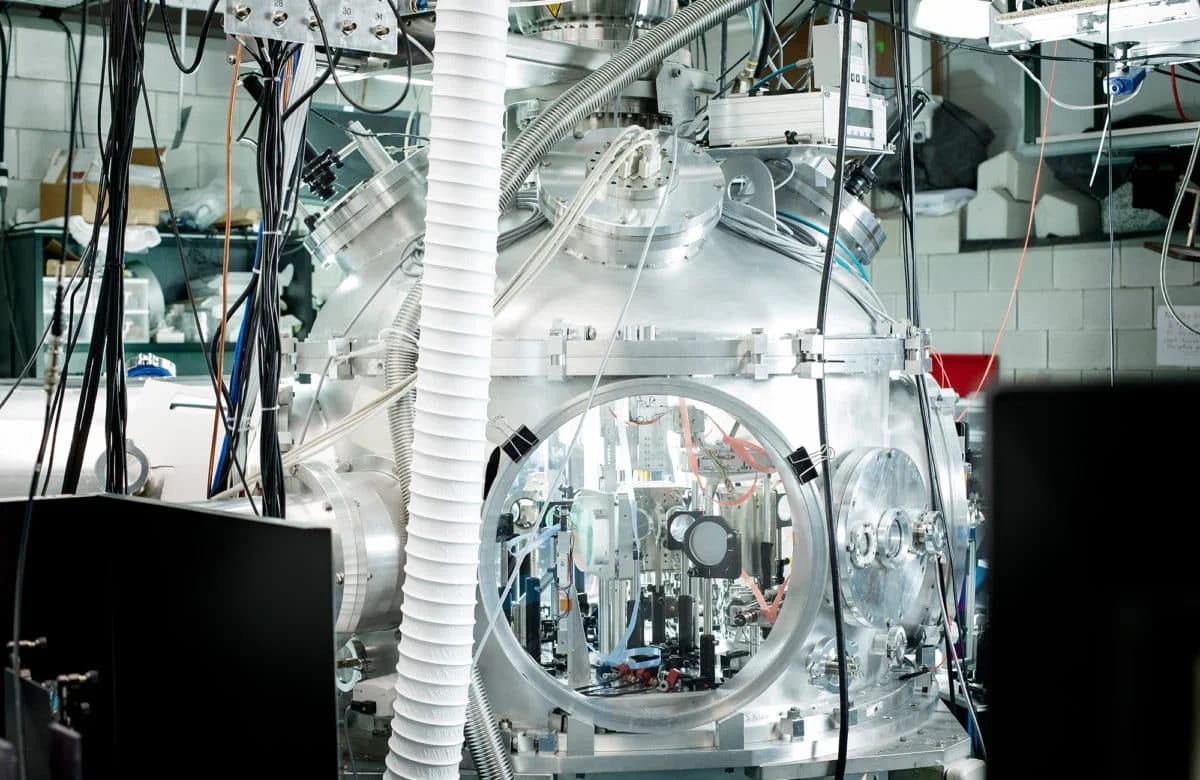
Institut national de la recherche scientifique (INRS)
Advanced Laser Light Source (ALLS)
Home of Canada's most powerful laser
1650 Lionel-Boulet Blvd. | Varennes, Québec | Canada J3X 1P7
About ALLS
The Advanced Laser Light Source (ALLS) is a unique national laser-based infrastructure providing a coherent rainbow of light and cutting-edge end-stations to its users. The facility is located at INRS-EMT and is home of the most powerful laser in Canada with 750 TW and high repetition rate laser systems to explore novel phenomena in matter with ultrafast tools.
ALLS opened to users in 2005 at the Varennes campus of INRS, twenty minutes from Montreal. Its laser-driven sources span the spectrum from terahertz to hard X-rays, together with electron and ion beams, all with ultrashort pulse durations. Because every source is generated optically, they can be synchronized with one another. Users bring experiments in attosecond and strong-field physics, laser wakefield acceleration and betatron X-ray imaging, laser-driven ion sources, ultrafast spectroscopy of quantum materials, and laser processing of materials.
ALLS is a national user facility. Beamtime is allocated on scientific and innovative merit through calls for proposals, and part of the schedule is reserved for projects with Canadian companies and government agencies. The next call for proposals runs on LabGiant: it opens on this page, and proposals are written and submitted here. Since 2023 the facility has been supported by the Canada Foundation for Innovation through its Major Science Initiatives fund, and it is the Canadian member of the LaserNetUS network of high-power laser facilities.
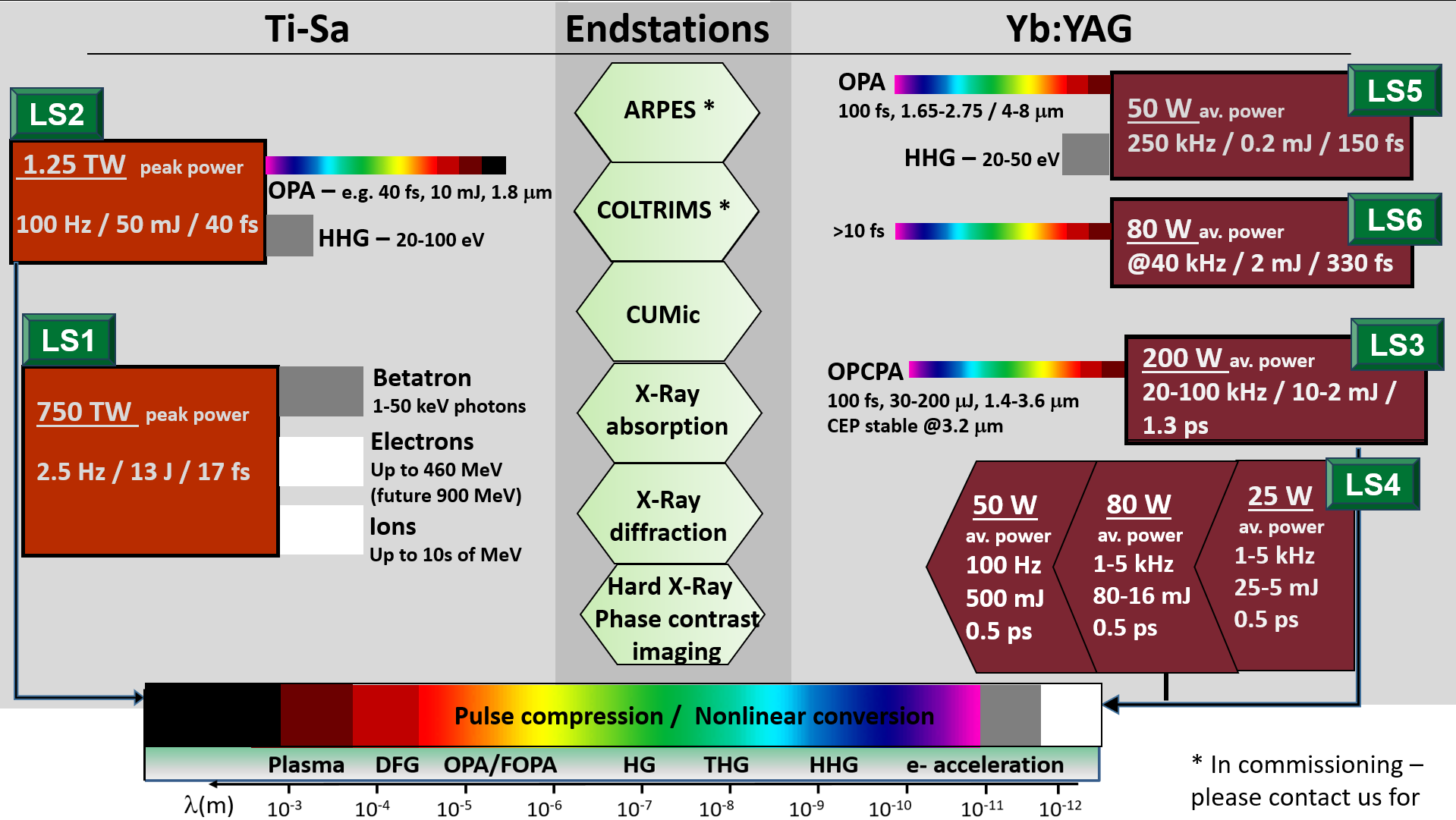
Beamlines and endstations
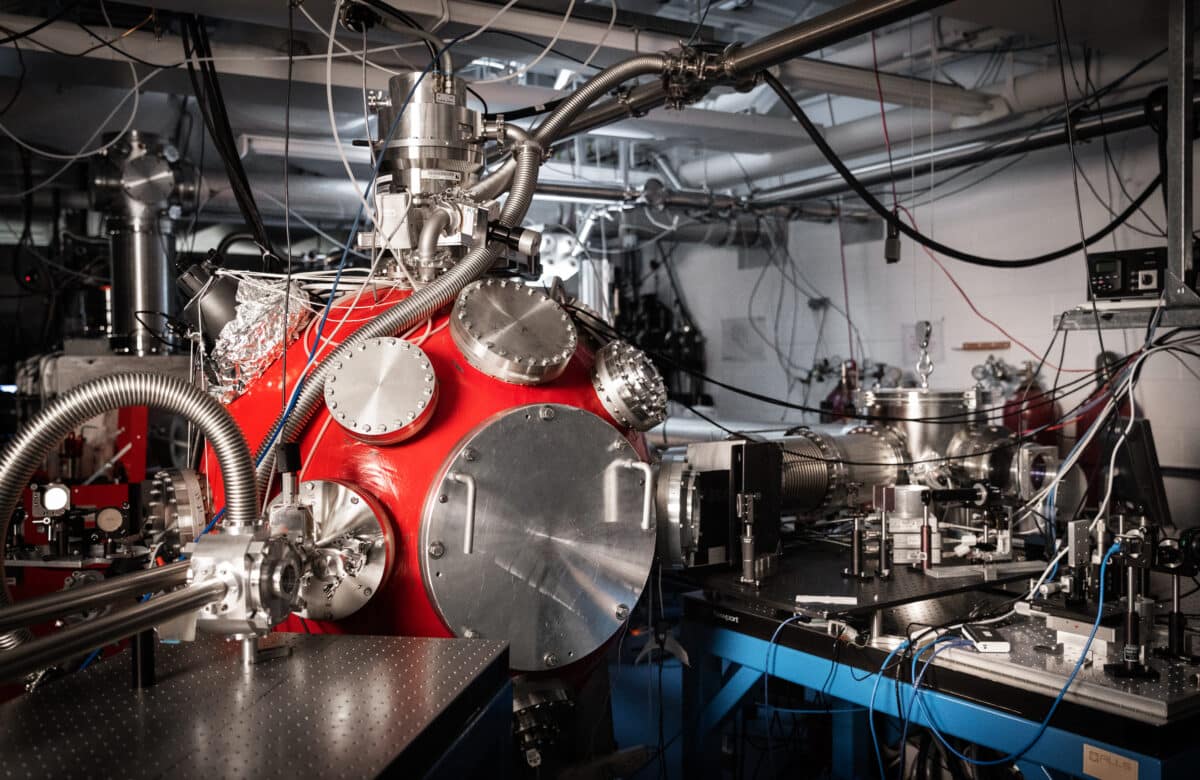
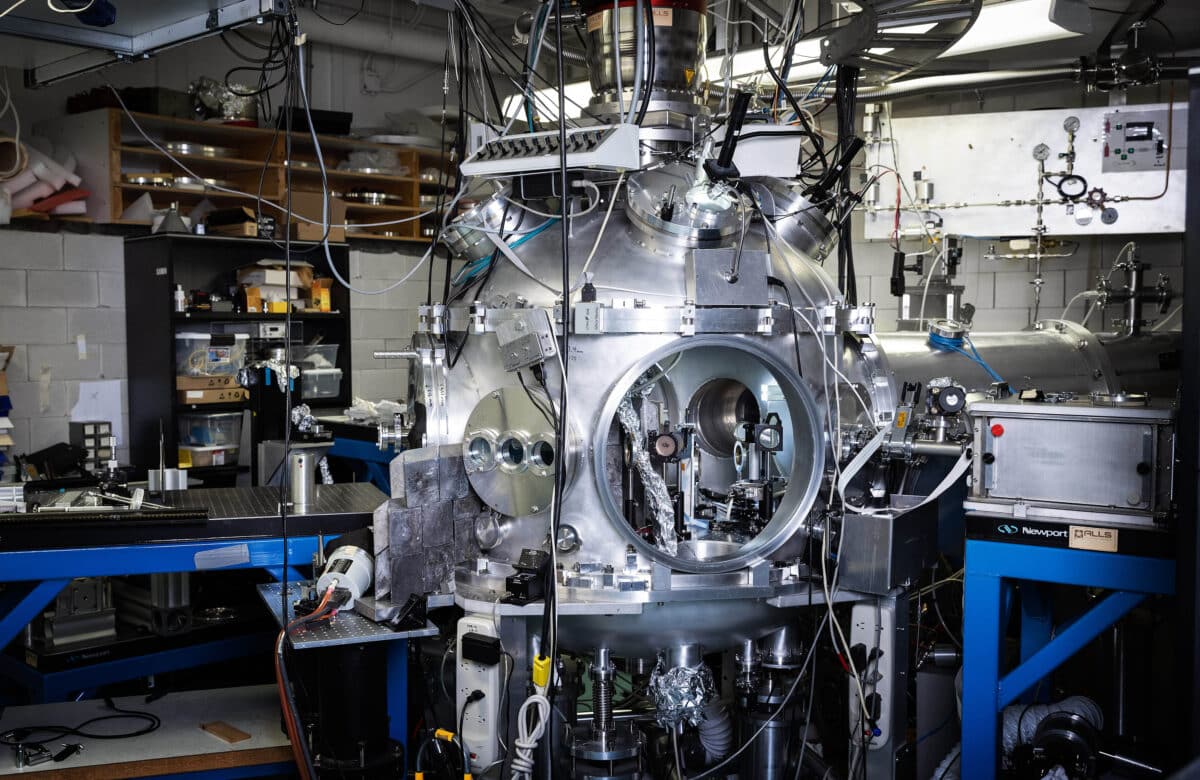
Six laser systems feed the beamlines. Two are titanium-sapphire systems at 800 nm: LS1, the 750 TW line (2.5 Hz, 13 J, 17 fs) with a 145 TW second line that drives laser wakefield acceleration and the betatron source, and LS2, a 1.25 TW system at 100 Hz (50 mJ, 40 fs) for experiments that need both energy per pulse and repetition rate. Four ytterbium systems at 1030 nm, LS3 to LS6, cover repetition rates from 100 Hz to 2 MHz and pulse durations from 150 fs to 14 ps.
Around the lasers: optical parametric amplifiers tunable from 200 nm to 20 µm, hollow-core fibre compression to few-cycle pulses, high-harmonic generation with an XUV spectrometer, a betatron X-ray source for phase-contrast imaging and time-resolved X-ray absorption, laser wakefield electron beams demonstrated at several hundred MeV, and a laser-driven ion source with automated target delivery. Endstations include the TR-ARPES photoemission spectrometer and the COLTRIMS reaction microscope operated with the University of Waterloo.
The systems listed on this page are shown for reference, with the parameters ALLS publishes. Beamtime is not booked from this page. See how to get beamtime below.
Photos: INRS. Capability map: ALLS.
How to get beamtime
ALLS is a national user facility and welcomes all users. There are four ways in.
- Calls for proposals. When ALLS opens a call, proposals are evaluated on scientific and innovative merit by the Beamtime Allocation Committee, and beamtime is scheduled for the successful projects. The next call for proposals runs on LabGiant: it opens on this page, and proposals are written and submitted here.
- LaserNetUS. Free access to LS1 and to the high-energy infrared beamline of LS2, for proposals submitted through a LaserNetUS call.
- Flex access. Academic researchers who need a beamline without waiting for a call can request time directly with a letter of intent.
- Industrial access. Projects with Canadian industry partners are arranged directly with the facility.
Beamtime is attributed in blocks of one week, planned as five eight-hour shifts. Users bring the optical components their experiment needs and describe their layout, electrical, cooling and equipment requirements when they apply. User fees for the flex and industrial routes are published on the ALLS website. Publications must acknowledge ALLS and its funders, the Canada Foundation for Innovation and the Government of Quebec.
For scientific questions and letters of intent: Heide Ibrahim, [email protected], or [email protected]. For technical questions: [email protected].
Contact the facility
Talk to the team about your research, access, or a visit.
Find us
Institut national de la recherche scientifique (INRS)
1650 Lionel-Boulet Blvd. | Varennes, Québec | Canada J3X 1P7