Pending approval · We review every lab before it joins the marketplace. We'll let you know the moment yours goes live.
Institut national de la recherche scientifique (INRS)
Laboratoire de biotechnologies environnementales (LBE)
Your bioprocesses, from flask to 2000 liters, from raw material to finished product.
Translated from French
2605, boulevard du Parc-Technologique, Québec (Québec) G1P 4S5
The Laboratory
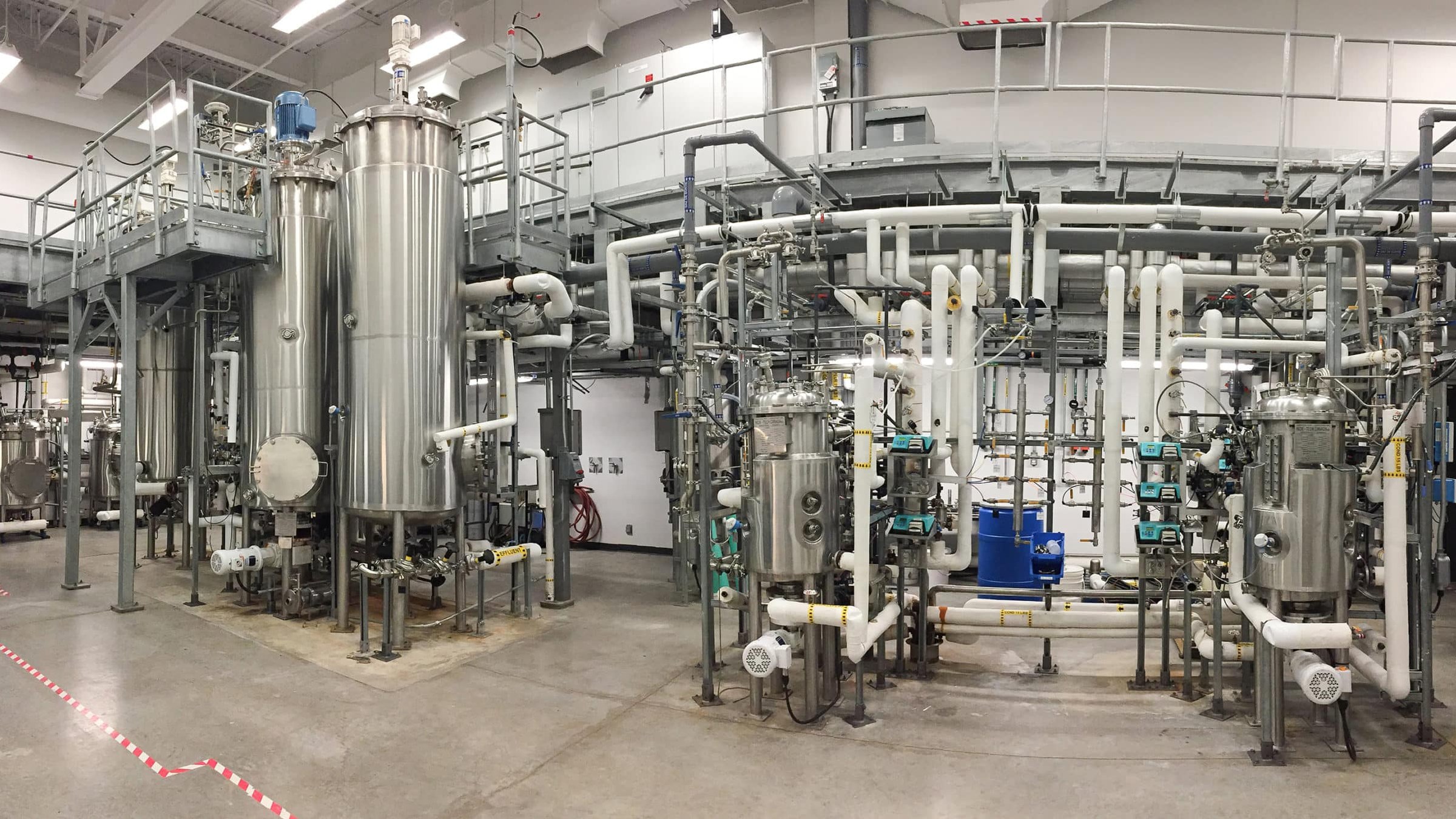
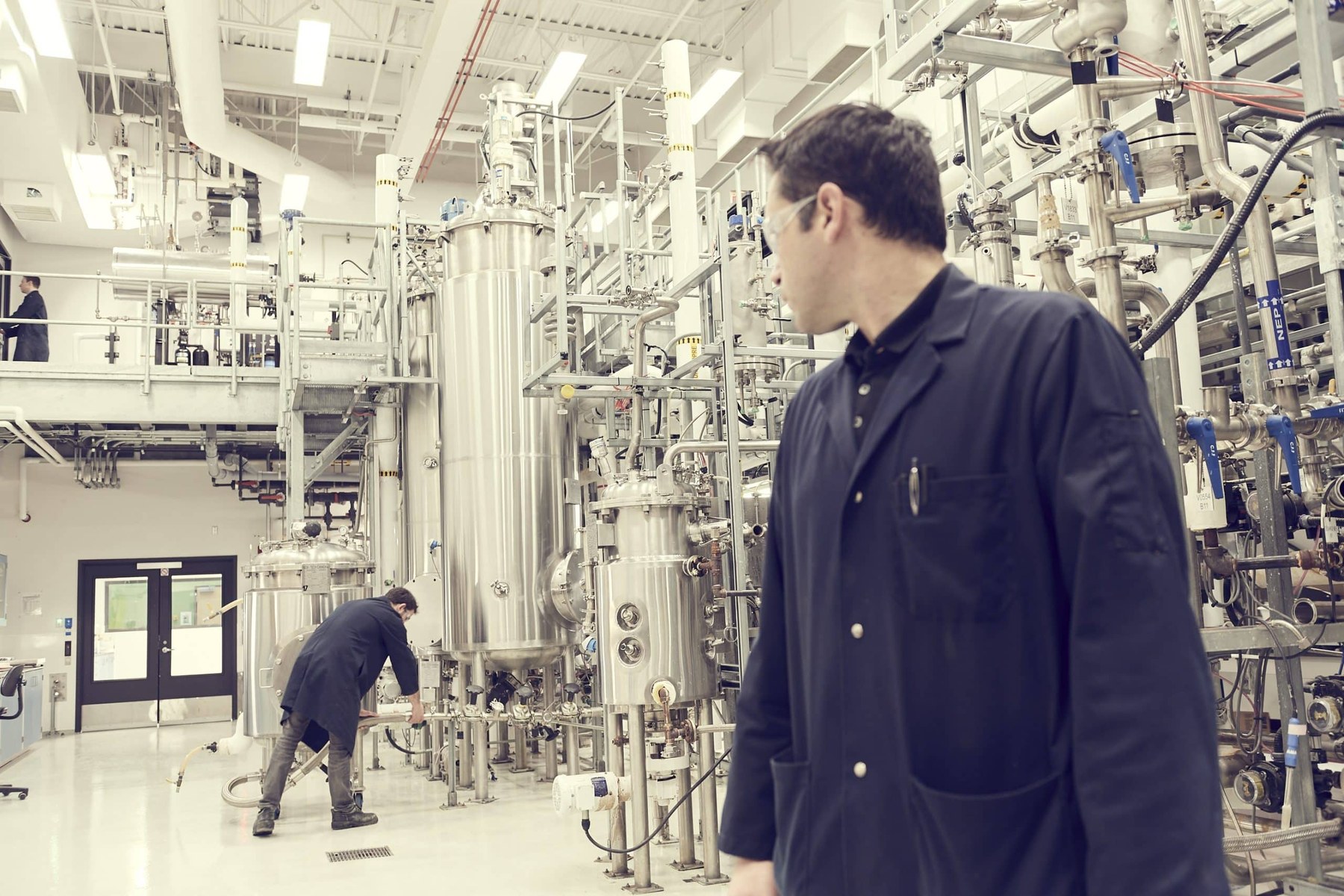
INRS's Environmental Biotechnology Laboratory (LBE) develops and scales up production processes for bioproducts using residual materials or synthetic culture media. Researchers and companies bring their production processes for enzymes, biopesticides, bioplastics, or biosurfactants here up to a pre-commercial scale.
"INRS is the only university in Canada to have such a scale-up platform that offers, in addition to equipment, research and development expertise."
Kokou Adjallé, scientific director of the LBE, in 2022
The LBE is funded by the Canada Foundation for Innovation (CFI) and the Government of Quebec. In 2022, Canada Economic Development for Quebec Regions granted it $5.2 million to acquire new equipment and increase the platform's capacity.
Every stage, under one roof
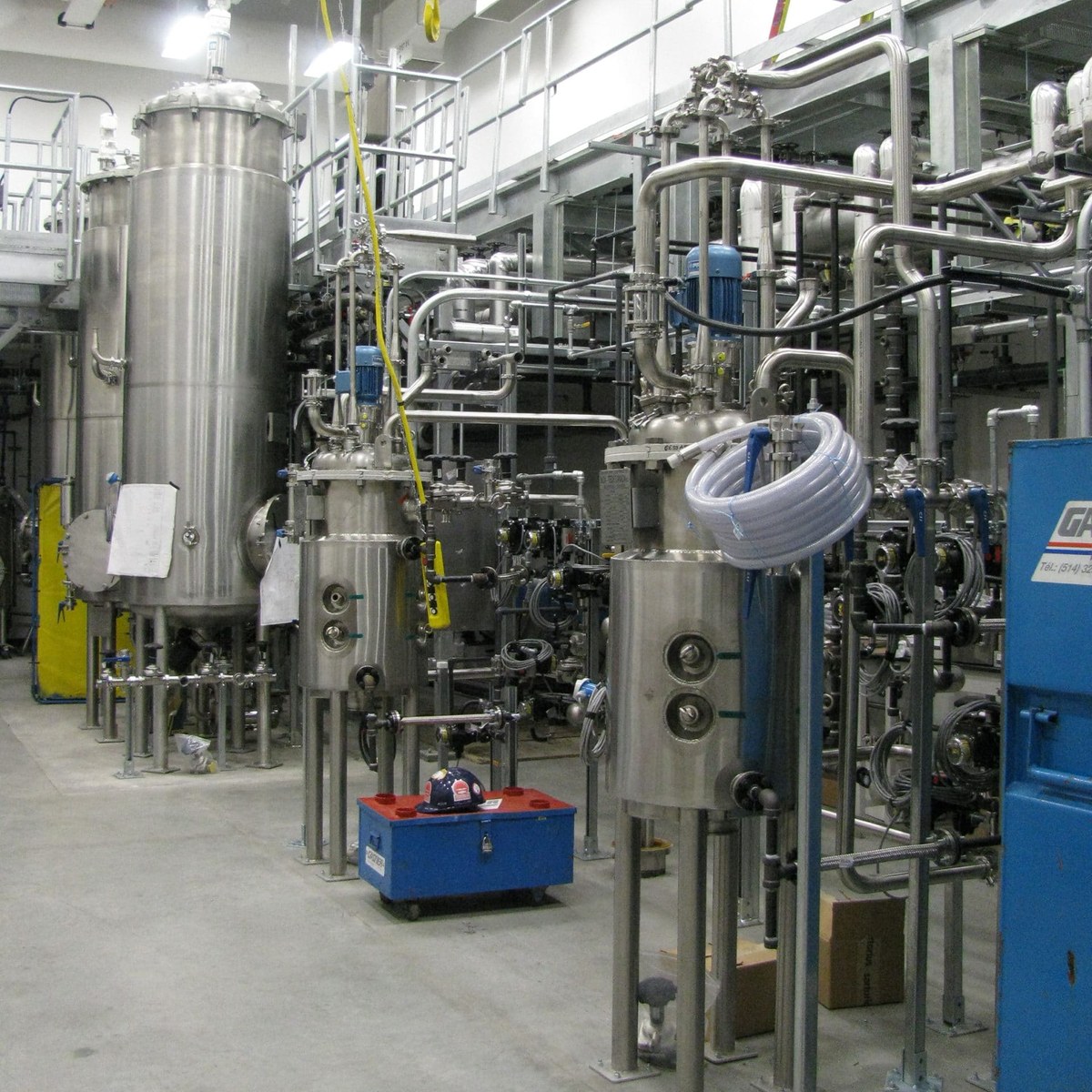
Prepare the feedstock. An industrial screener and two hydrolyzers, 150 and 2000 L, condition non-conventional substrates: sewage sludge, agri-food wastewater, agricultural residues, or industrial waste.
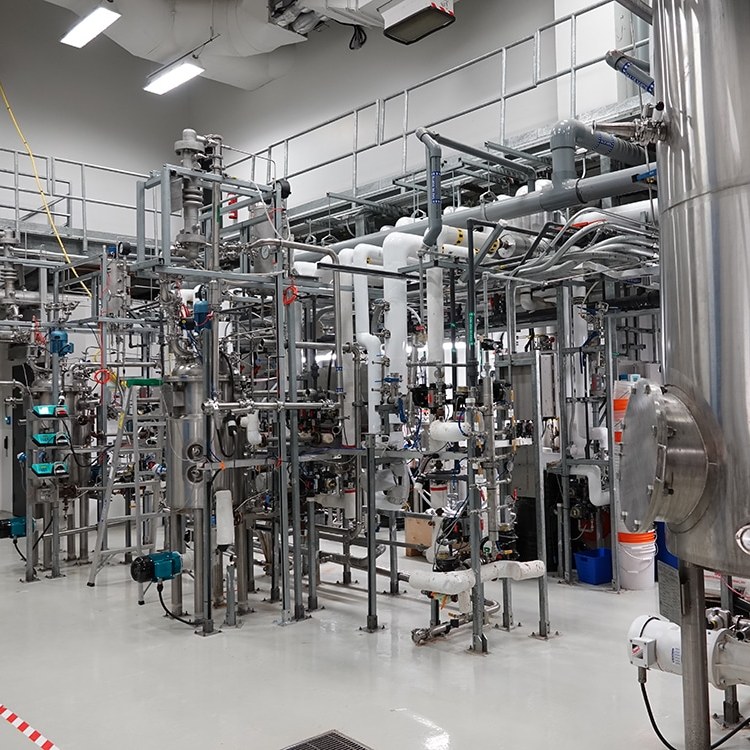
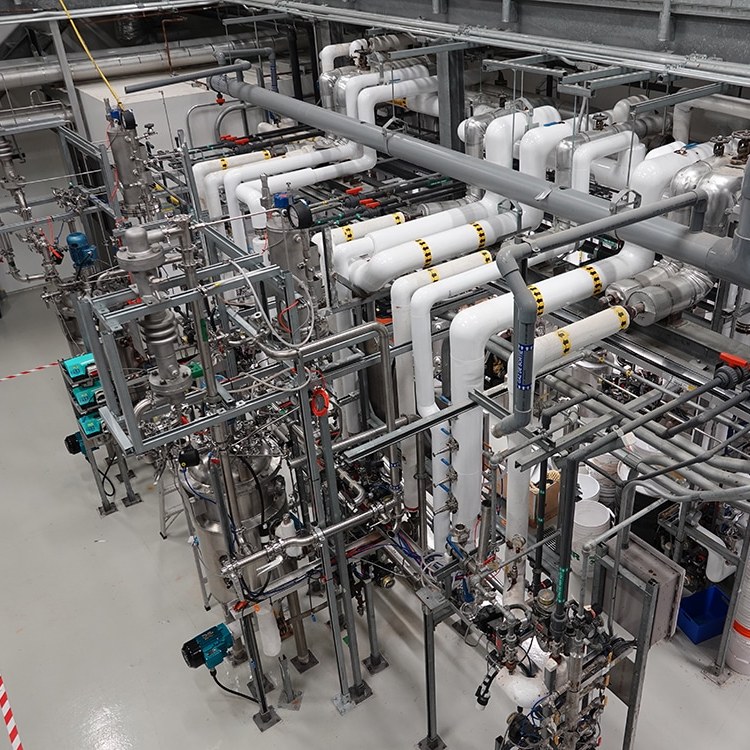
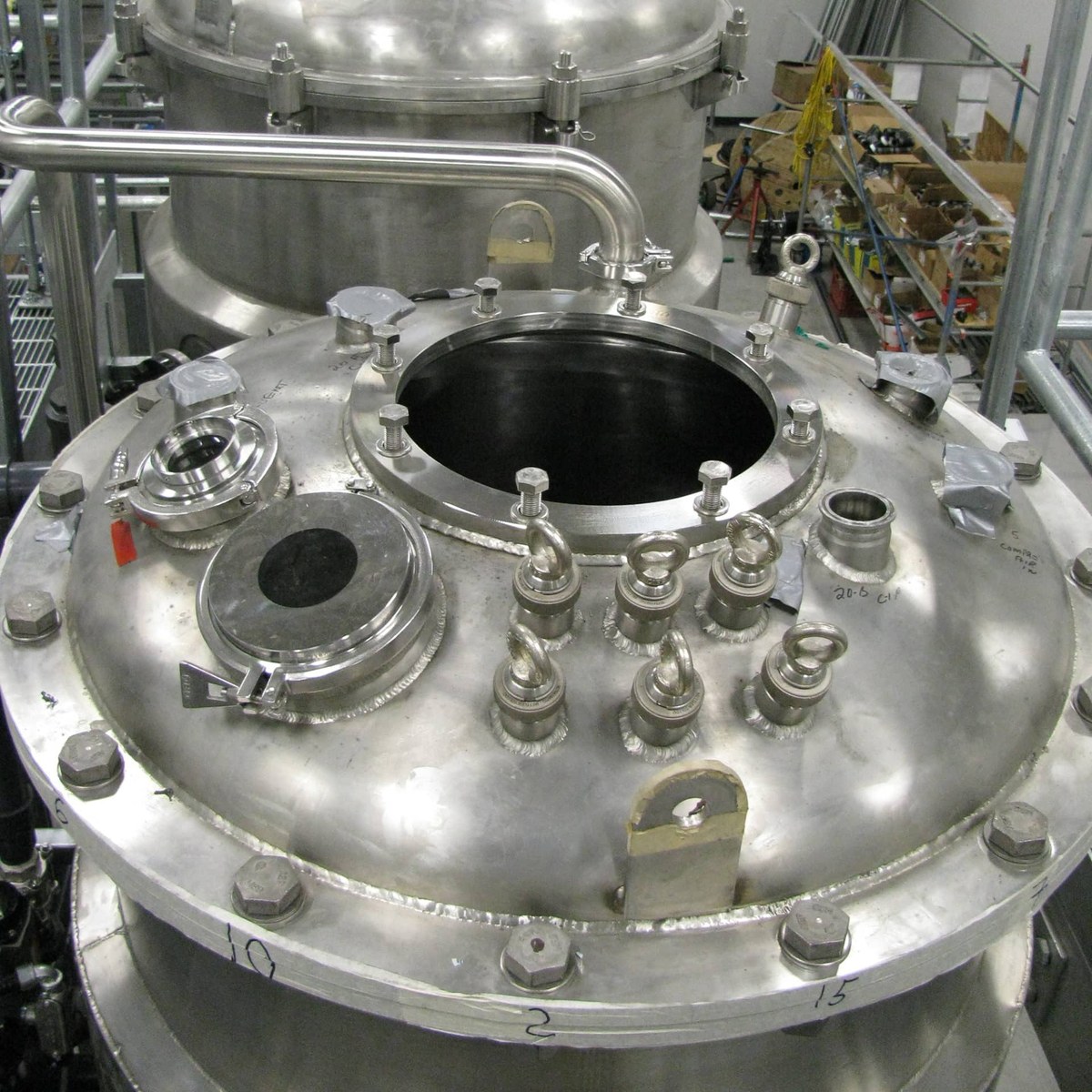
Ferment, step by step. Our two fully instrumented biosafety level 1 fermentation laboratories each have their own set of bioreactors: two 5 L, two 15 L, two 150 L, and one 2000 L. One is dedicated to conventional culture media, the other to residual materials, to avoid any contamination. The 2000 L hydrolyzer can also serve as a bioreactor.
Recover and formulate the product. At semi-industrial scale, an industrial disc-stack centrifuge, a microfiltration and ultrafiltration unit, and an ion-exchange chromatography system recover and purify your product. A freeze dryer dries it, and a spray dryer formulates it into powder or granules.
Prepare strains and control quality. A class 100 controlled-environment room, biosafety level 2, is used to produce inocula, preserve strains, and characterize purified products. Our analytical laboratory (GC-MS, LC-MS/MS, flow cytometry) characterizes substrates and provides process monitoring and quality control.
Bioproducts and Raw Materials
Our work focuses on microbial and fungal biopesticides, microbial inoculants, plant growth promoters, industrial enzymes, bioplastics and other biopolymers, biofuels, biosurfactants, and biohydrogen.
Our processes use urban, industrial, or agricultural waste, fresh biomass, or synthetic culture media, working with known, novel, or genetically modified strains.
Start a Project
1. Describe your project. Select the service of interest and outline in a few lines what you want to produce, from which raw material, and your current progress.
2. We get back to you. Our scientific team reviews your process with you and the steps to plan for.
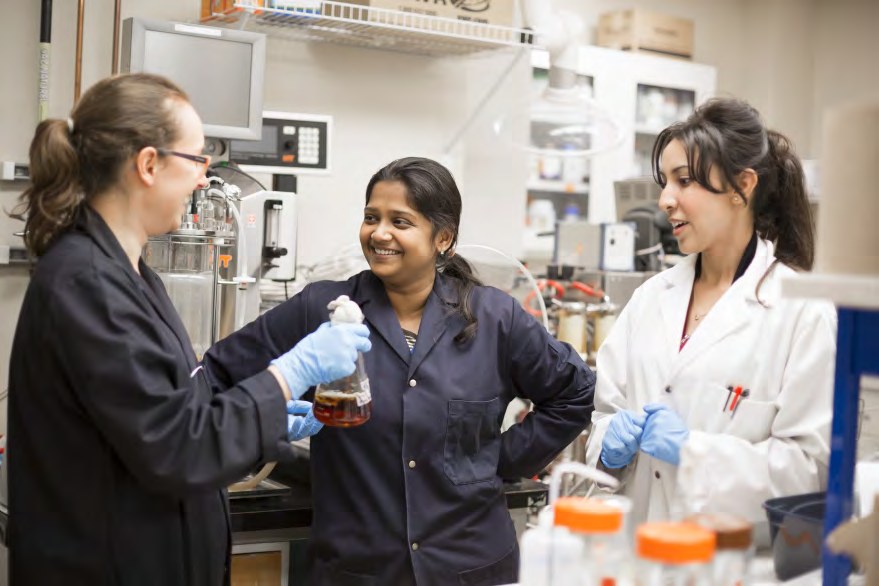
3. We carry out the work. Our staff performs fermentations and analyses upon request, and your teams can also receive training on our equipment.
The LBE is open to public and private sectors, and our services are conducted under confidentiality rules.
Contact the facility
Talk to the team about your research, access, or a visit.
Before your project
Tell us about your bioprocess: what you want to produce, from which raw material, and at what scale. The LBE is open to public and private sectors, and its services are provided in compliance with confidentiality rules.
Get in touch
Find us
Institut national de la recherche scientifique (INRS)
Laboratoires pour l'innovation scientifique et technologique de l'environnement (LISTE)
2605, boulevard du Parc-Technologique, Québec (Québec) G1P 4S5
Get directions