ItemAvailable
Micropocket Mastermold: Precision Tool for 3D Spheroid and Organoid Culture
Quote on request
Faculty of Engineering
Chemical Engineering
McGill University
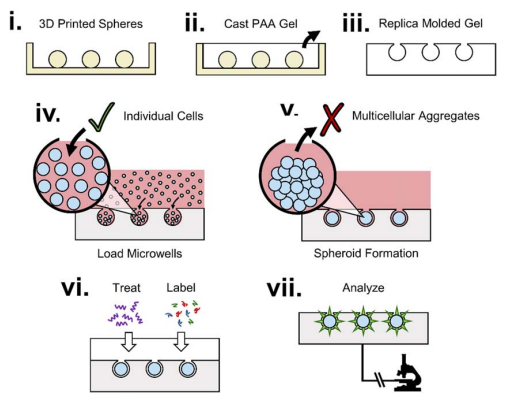
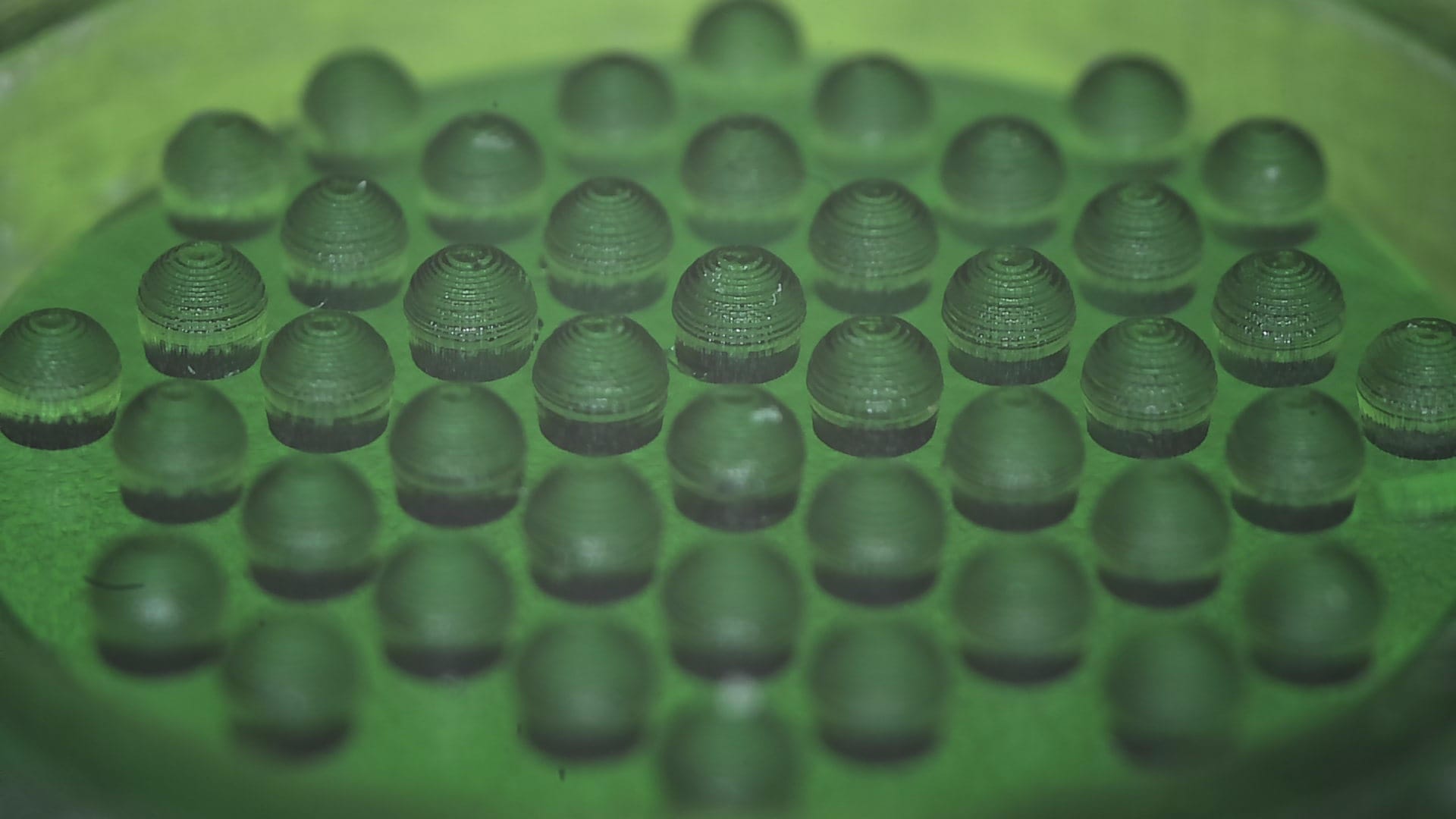
The Micropocket Mastermold (MPoC) is engineered to produce uniform, spherical multicellular aggregates—such as spheroids and organoids—within defined 3D hydrogel environments. Utilizing a 3D-printed mold, MPoC creates an array of simple geometry-based valves in polyacrylamide hydrogels, enabling the formation of hundreds of uniformly sized aggregates in standard tissue culture well plates. This design ensures that aggregates remain in fixed positions during various experimental procedures, including stimulation, labeling, and imaging.
Key Features:
- High-Throughput Capability: MPoC allows for the simultaneous formation of numerous aggregates, facilitating large-scale studies.
- Uniform Aggregate Formation: The system produces aggregates with consistent size and shape, which is crucial for reproducibility in experiments.
- Compatibility with Various Cell Types: MPoC supports the formation of aggregates from multiple cell types, including those that are typically challenging to culture in 3D formats.
- Integration with Standard Laboratory Equipment: The mold is designed for use with standard well plates and requires only basic laboratory tools, making it accessible for most biological wet labs.
- Facilitation of Complex Tissue Assembly: Aggregates formed using MPoC can be assembled into larger tissue constructs, enabling studies on tissue engineering and cell behavior.
Applications:
- Cancer Research: Modeling tumor spheroids to study cancer cell behavior and drug responses.
- Stem Cell Differentiation: Creating uniform aggregates to investigate stem cell fate decisions.
- Drug Screening: High-throughput testing of pharmaceutical compounds on 3D cell cultures.
- Tissue Engineering: Building complex tissue structures from organized multicellular aggregates.
The MPoC system addresses the limitations of traditional 3D culture methods by providing a scalable, reproducible, and user-friendly platform for the formation and analysis of multicellular aggregates. Its design facilitates a wide range of biomedical research applications, from fundamental studies to applied drug discovery.
Cellular Microenvironment Design Lab
Faculty of Engineering
Shared research facility offering instruments, services and expertise.
CL
Chen Li
Cellular Microenvironment Design Lab · McGill UniversityItemAvailable
Micropocket Mastermold: Precision Tool for 3D Spheroid and Organoid Culture
Quote on request
Faculty of Engineering
Chemical Engineering
McGill University
The Micropocket Mastermold (MPoC) is engineered to produce uniform, spherical multicellular aggregates—such as spheroids and organoids—within defined 3D hydrogel environments. Utilizing a 3D-printed mold, MPoC creates an array of simple geometry-based valves in polyacrylamide hydrogels, enabling the formation of hundreds of uniformly sized aggregates in standard tissue culture well plates. This design ensures that aggregates remain in fixed positions during various experimental procedures, including stimulation, labeling, and imaging.
Key Features:
- High-Throughput Capability: MPoC allows for the simultaneous formation of numerous aggregates, facilitating large-scale studies.
- Uniform Aggregate Formation: The system produces aggregates with consistent size and shape, which is crucial for reproducibility in experiments.
- Compatibility with Various Cell Types: MPoC supports the formation of aggregates from multiple cell types, including those that are typically challenging to culture in 3D formats.
- Integration with Standard Laboratory Equipment: The mold is designed for use with standard well plates and requires only basic laboratory tools, making it accessible for most biological wet labs.
- Facilitation of Complex Tissue Assembly: Aggregates formed using MPoC can be assembled into larger tissue constructs, enabling studies on tissue engineering and cell behavior.
Applications:
- Cancer Research: Modeling tumor spheroids to study cancer cell behavior and drug responses.
- Stem Cell Differentiation: Creating uniform aggregates to investigate stem cell fate decisions.
- Drug Screening: High-throughput testing of pharmaceutical compounds on 3D cell cultures.
- Tissue Engineering: Building complex tissue structures from organized multicellular aggregates.
The MPoC system addresses the limitations of traditional 3D culture methods by providing a scalable, reproducible, and user-friendly platform for the formation and analysis of multicellular aggregates. Its design facilitates a wide range of biomedical research applications, from fundamental studies to applied drug discovery.
Cellular Microenvironment Design Lab
Faculty of Engineering
Shared research facility offering instruments, services and expertise.
CL
Chen Li
Cellular Microenvironment Design Lab · McGill UniversityYou might also like
Discover more resources that could support your research