ServiceAvailable
Genome Assembly & Annotation
Faculty of Medicine and Health Sciences
Core Facility
McGill University
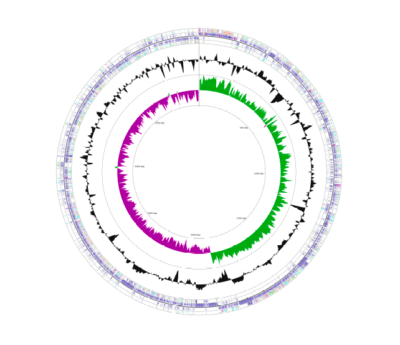
The Canadian Centre for Computational Genomics (C3G) has extensive experience in de novo genome assembly, offering solutions for both small (haploid; prokaryotes, archaea) and large (diploid; eukaryotes) genomes. By utilizing long-read sequencing technologies such as PacBio and Oxford Nanopore, alongside short-read hybrid assembly approaches, C3G ensures high-quality genome reconstruction, even for complex genomic regions.
Their comprehensive genome assembly and annotation services include:
- Detection, polishing, and circularization of bacterial chromosomes or other circular DNA molecules, such as plasmids and mitochondrial DNA.
- Refinement of de novo assemblies using Hi-C scaffolding and other supporting technologies to enhance genome continuity and accuracy.
- Complete genome annotation using pipelines such as PGAP (for prokaryotes) and AUGUSTUS/MAKER (for eukaryotes) to provide gene function insights.
- Reference-based variant detection, identifying INDELs, SNPs, large structural rearrangements, and phased alleles across genomes.
- Multi-genome comparisons for identifying evolutionary relationships and genetic variation.
- Full-length RNA transcript isoform identification, enabling the detection of novel isoforms that improve gene annotation accuracy.
- Epigenetic base modification detection, including microbial and eukaryotic DNA modifications, to study regulatory mechanisms.
- Multiplexed environmental samples processing, allowing for species-level resolution via full-length 16S/18S rDNA and ITS regions for microbial community studies.
C3G leverages third-generation sequencing technologies, such as PacBio HiFi long reads and Oxford nanopore, which offer Illumina-like quality while covering large, repetitive, or highly complex genomic regions in single long reads. This approach significantly improves genome assemblies by accurately placing transposable elements (TEs), repeat sequences, and ribosomal RNA (rRNA) islands.
With continuous improvements in long-read sequencing throughput and cost efficiency, C3G remains committed to adopting the latest sequencing advancements to optimize project outcomes and provide cutting-edge genome assembly solutions to researchers and collaborators.

Canadian Centre for Computational Genomics (C3G)
Faculty of Medicine and Health Sciences
Shared research facility offering instruments, services and expertise.
GB
Guillaume Bourque
Canadian Centre for Computational Genomics (C3G) · McGill UniversityServiceAvailable
Genome Assembly & Annotation
Faculty of Medicine and Health Sciences
Core Facility
McGill University
The Canadian Centre for Computational Genomics (C3G) has extensive experience in de novo genome assembly, offering solutions for both small (haploid; prokaryotes, archaea) and large (diploid; eukaryotes) genomes. By utilizing long-read sequencing technologies such as PacBio and Oxford Nanopore, alongside short-read hybrid assembly approaches, C3G ensures high-quality genome reconstruction, even for complex genomic regions.
Their comprehensive genome assembly and annotation services include:
- Detection, polishing, and circularization of bacterial chromosomes or other circular DNA molecules, such as plasmids and mitochondrial DNA.
- Refinement of de novo assemblies using Hi-C scaffolding and other supporting technologies to enhance genome continuity and accuracy.
- Complete genome annotation using pipelines such as PGAP (for prokaryotes) and AUGUSTUS/MAKER (for eukaryotes) to provide gene function insights.
- Reference-based variant detection, identifying INDELs, SNPs, large structural rearrangements, and phased alleles across genomes.
- Multi-genome comparisons for identifying evolutionary relationships and genetic variation.
- Full-length RNA transcript isoform identification, enabling the detection of novel isoforms that improve gene annotation accuracy.
- Epigenetic base modification detection, including microbial and eukaryotic DNA modifications, to study regulatory mechanisms.
- Multiplexed environmental samples processing, allowing for species-level resolution via full-length 16S/18S rDNA and ITS regions for microbial community studies.
C3G leverages third-generation sequencing technologies, such as PacBio HiFi long reads and Oxford nanopore, which offer Illumina-like quality while covering large, repetitive, or highly complex genomic regions in single long reads. This approach significantly improves genome assemblies by accurately placing transposable elements (TEs), repeat sequences, and ribosomal RNA (rRNA) islands.
With continuous improvements in long-read sequencing throughput and cost efficiency, C3G remains committed to adopting the latest sequencing advancements to optimize project outcomes and provide cutting-edge genome assembly solutions to researchers and collaborators.
Canadian Centre for Computational Genomics (C3G)
Faculty of Medicine and Health Sciences
Shared research facility offering instruments, services and expertise.
GB
Guillaume Bourque
Canadian Centre for Computational Genomics (C3G) · McGill UniversityYou might also like
Discover more resources that could support your research