ServiceAvailable
RNA-Seq Analysis
Faculty of Medicine and Health Sciences
Core Facility
McGill University
RNA sequencing (RNA-Seq) is one of the most commonly requested services at the Canadian Centre for Computational Genomics (C3G). Their expert team provides comprehensive RNA-Seq analysis to help researchers extract meaningful insights from transcriptomic data. This service includes essential preprocessing steps such as alignment, assembly, and quantification of gene expression levels.
To ensure data integrity and reliability, expert quality control (QC) and exploratory data analysis (EDA) are conducted, including Principal Component Analysis (PCA) for assessing data variability. Differential expression analysis is performed using linear models, allowing researchers to identify genes with significant expression changes under different conditions.
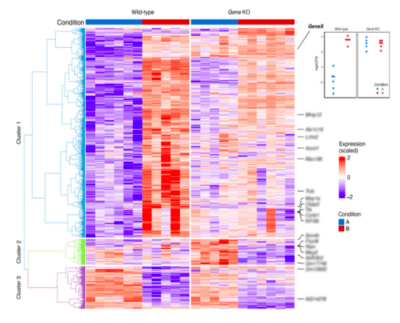
Additionally, C3G offers customized visualizations to effectively communicate findings and interpret results. Further analysis options include pathway and gene set testing, expressed single nucleotide variant (eSNV) calling, fusion detection, and deconvolution. Their expertise extends to specialized applications such as patient-derived xenograft (PDX) analysis, data decontamination, and alternative splicing analysis, ensuring a robust and tailored approach to transcriptomic research.

Canadian Centre for Computational Genomics (C3G)
Faculty of Medicine and Health Sciences
Shared research facility offering instruments, services and expertise.
GB
Guillaume Bourque
Canadian Centre for Computational Genomics (C3G) · McGill UniversityServiceAvailable
RNA-Seq Analysis
Faculty of Medicine and Health Sciences
Core Facility
McGill University
RNA sequencing (RNA-Seq) is one of the most commonly requested services at the Canadian Centre for Computational Genomics (C3G). Their expert team provides comprehensive RNA-Seq analysis to help researchers extract meaningful insights from transcriptomic data. This service includes essential preprocessing steps such as alignment, assembly, and quantification of gene expression levels.
To ensure data integrity and reliability, expert quality control (QC) and exploratory data analysis (EDA) are conducted, including Principal Component Analysis (PCA) for assessing data variability. Differential expression analysis is performed using linear models, allowing researchers to identify genes with significant expression changes under different conditions.
Additionally, C3G offers customized visualizations to effectively communicate findings and interpret results. Further analysis options include pathway and gene set testing, expressed single nucleotide variant (eSNV) calling, fusion detection, and deconvolution. Their expertise extends to specialized applications such as patient-derived xenograft (PDX) analysis, data decontamination, and alternative splicing analysis, ensuring a robust and tailored approach to transcriptomic research.
Canadian Centre for Computational Genomics (C3G)
Faculty of Medicine and Health Sciences
Shared research facility offering instruments, services and expertise.
GB
Guillaume Bourque
Canadian Centre for Computational Genomics (C3G) · McGill UniversityYou might also like
Discover more resources that could support your research