
Digital AssetAvailable
Leica Filtercubes Documentation
Quote on request
Faculty of Medicine and Health Sciences
Core Facility
McGill University
This PDF document provides specific information regarding Leica filtercubes, which are essential components in fluorescence microscopy for selecting specific excitation and emission wavelengths. Filtercubes typically consist of an excitation filter, a dichroic mirror, and an emission filter, working in conjunction to isolate the fluorescence signal from the excitation light. The documentation likely details the specifications of various filtercubes offered by Leica, including their spectral properties, compatibility with different fluorophores, and applications in various microscopy techniques. Proper selection of filtercubes is crucial for optimizing signal-to-noise ratio, minimizing autofluorescence, and achieving accurate multi-color imaging. This resource is particularly useful for researchers setting up or troubleshooting fluorescence microscopy experiments on Leica systems, ensuring they use the correct optical filters for their specific fluorophores and experimental designs. It helps in understanding the optical path and spectral requirements for high-quality fluorescence imaging.
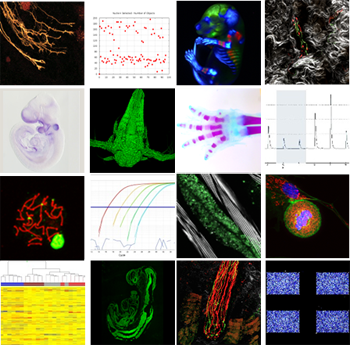
Imaging and Molecular Biology Platform
Faculty of Medicine and Health Sciences
Shared research facility offering instruments, services and expertise.
NA
Nicolas Audet
Scientist with excellent management, organization, critical thinking and problem-solving skills. Experience in creating, planning and conducting projects that result in scientific publications. Strong ability to collaborate with a broad range of teams from research group to pharmaceutical companies.
Imaging and Molecular Biology Platform · McGill UniversityDigital AssetAvailable
Leica Filtercubes Documentation
Quote on request
Faculty of Medicine and Health Sciences
Core Facility
McGill University
This PDF document provides specific information regarding Leica filtercubes, which are essential components in fluorescence microscopy for selecting specific excitation and emission wavelengths. Filtercubes typically consist of an excitation filter, a dichroic mirror, and an emission filter, working in conjunction to isolate the fluorescence signal from the excitation light. The documentation likely details the specifications of various filtercubes offered by Leica, including their spectral properties, compatibility with different fluorophores, and applications in various microscopy techniques. Proper selection of filtercubes is crucial for optimizing signal-to-noise ratio, minimizing autofluorescence, and achieving accurate multi-color imaging. This resource is particularly useful for researchers setting up or troubleshooting fluorescence microscopy experiments on Leica systems, ensuring they use the correct optical filters for their specific fluorophores and experimental designs. It helps in understanding the optical path and spectral requirements for high-quality fluorescence imaging.
Imaging and Molecular Biology Platform
Faculty of Medicine and Health Sciences
Shared research facility offering instruments, services and expertise.
NA
Nicolas Audet
Scientist with excellent management, organization, critical thinking and problem-solving skills. Experience in creating, planning and conducting projects that result in scientific publications. Strong ability to collaborate with a broad range of teams from research group to pharmaceutical companies.
Imaging and Molecular Biology Platform · McGill UniversityYou might also like
Discover more resources that could support your research