Digital AssetAvailable
SCDIFF: reconstruct cell differentiation trajectories and underlying regulatory networks from scRNA-seq RNA-seq data
Quote on request
Faculty of Medicine and Health Sciences
Biomedical Engineering
McGill University
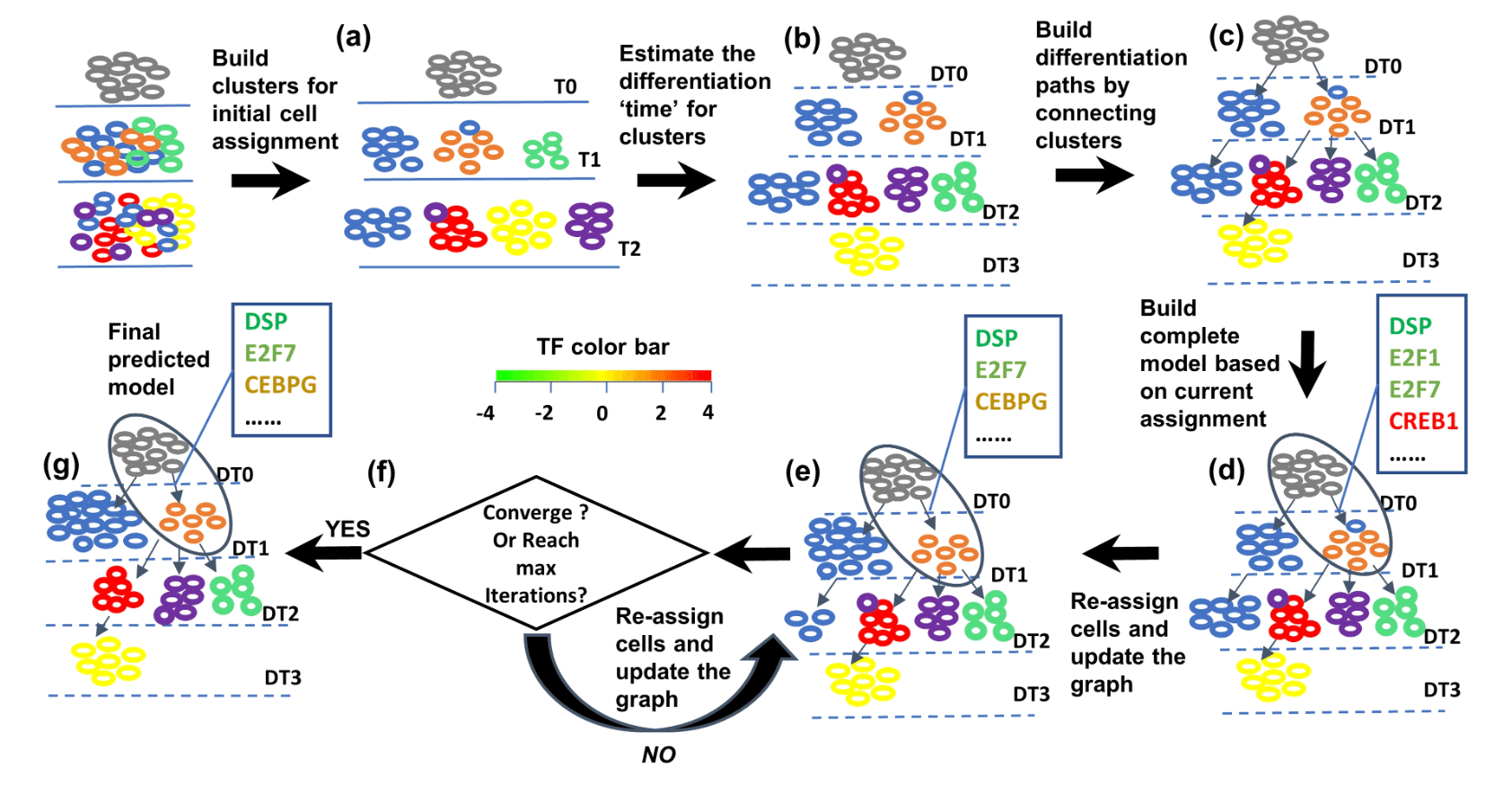
Most existing single-cell trajectory inference methods have relied primarily on the assumption that descendant cells are similar to their parents in terms of gene expression levels. These assumptions do not always hold for in-vivo studies which often include infrequently sampled, un-synchronized and diverse cell populations. Thus, additional information may be needed to determine the correct ordering and branching of progenitor cells and the set of transcription factors (TFs) that are active during advancing stages of organogenesis. To enable such modeling we developed scdiff, which integrates expression similarity with regulatory information to reconstruct the dynamic developmental cell trajectories.
SCDIFF is a package written in python and javascript, designed to analyze the cell differentiation trajectories using time-series single cell RNA-seq data. It is able to predict the transcription factors and differential genes associated with the cell differentiation trajectoreis. It also visualizes the trajectories using an interactive tree-stucture graph, in which nodes represent different sub-population cells (clusters).

Ding Lab
Faculty of Medicine and Health Sciences
Research lab focused on advancing scientific knowledge and innovation.
JD
Jun Ding
Ding Lab · McGill UniversityDigital AssetAvailable
SCDIFF: reconstruct cell differentiation trajectories and underlying regulatory networks from scRNA-seq RNA-seq data
Quote on request
Faculty of Medicine and Health Sciences
Biomedical Engineering
McGill University
Most existing single-cell trajectory inference methods have relied primarily on the assumption that descendant cells are similar to their parents in terms of gene expression levels. These assumptions do not always hold for in-vivo studies which often include infrequently sampled, un-synchronized and diverse cell populations. Thus, additional information may be needed to determine the correct ordering and branching of progenitor cells and the set of transcription factors (TFs) that are active during advancing stages of organogenesis. To enable such modeling we developed scdiff, which integrates expression similarity with regulatory information to reconstruct the dynamic developmental cell trajectories.
SCDIFF is a package written in python and javascript, designed to analyze the cell differentiation trajectories using time-series single cell RNA-seq data. It is able to predict the transcription factors and differential genes associated with the cell differentiation trajectoreis. It also visualizes the trajectories using an interactive tree-stucture graph, in which nodes represent different sub-population cells (clusters).
Ding Lab
Faculty of Medicine and Health Sciences
Research lab focused on advancing scientific knowledge and innovation.
JD
Jun Ding
Ding Lab · McGill UniversityYou might also like
Discover more resources that could support your research