Gladstone Institutes
Genomics Core
Single-cell, spatial and custom sequencing, from your cells or tissue to data, with QC along the way.
1650 Owens Street, San Francisco, CA 94158
The core
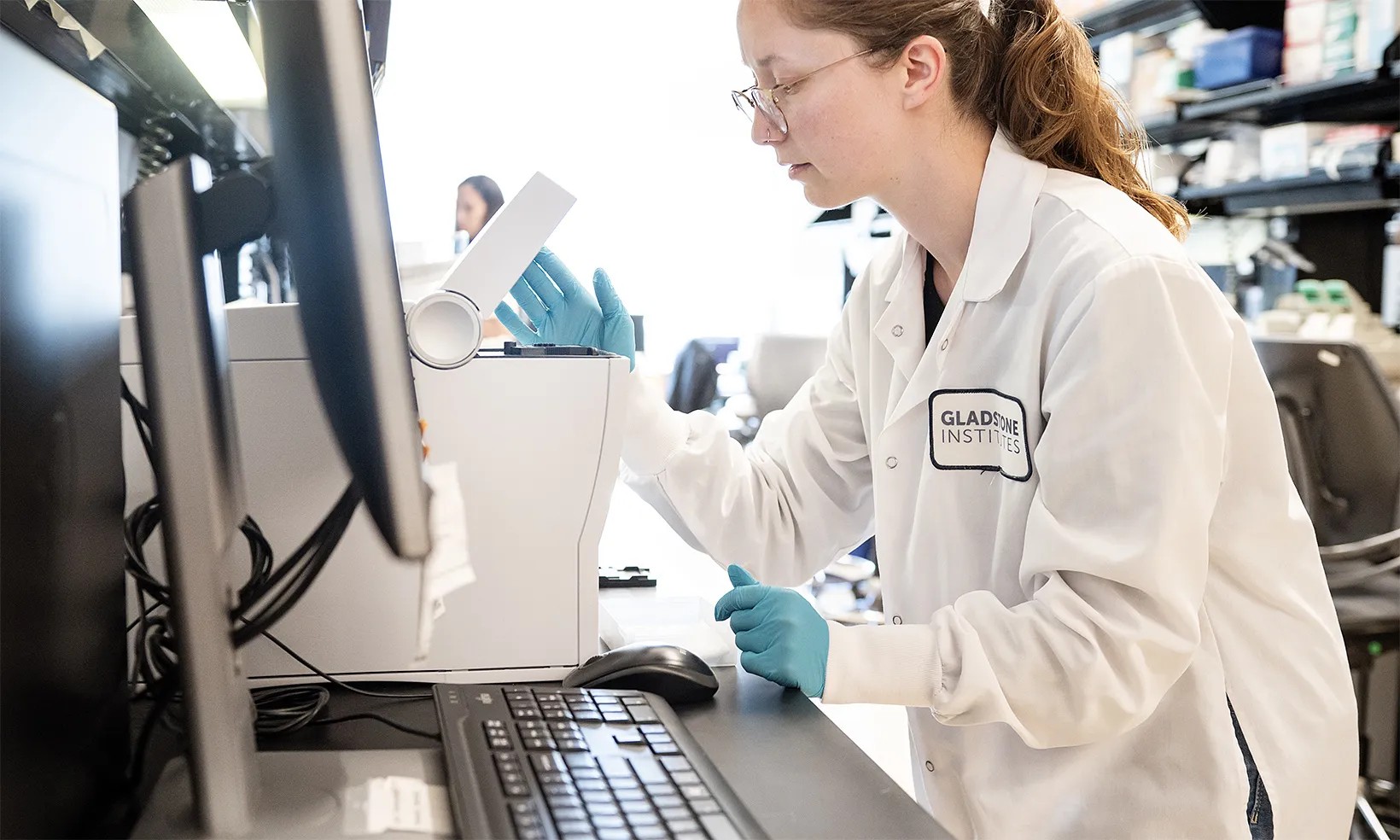
The Genomics Core runs genomic and sequencing projects for researchers at academic institutions and companies, as an extension of your own lab: from consultation and sample QC, through library construction, to sequencing.
The core's approach is to consult with you before the experiment is designed: on the design, the sample preparation, the experiment itself and how the data will be read. When it helps, the core brings 10x Genomics or Gladstone's Bioinformatics Core into the discussion.
The core works closely with the other Gladstone cores, the UCSF Center for Advanced Technology, the UCSF Core Immunology Lab and 10x Genomics, and adds new techniques as they arrive.
What the core runs
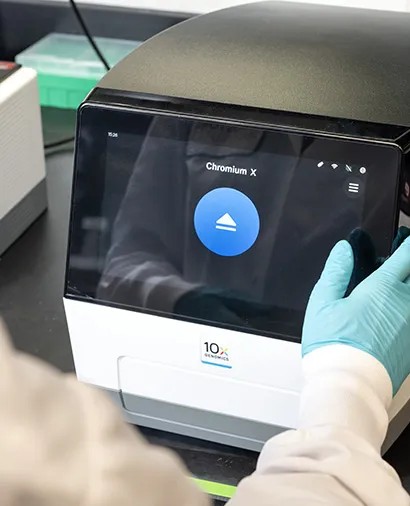
Single cell. 10x Genomics Chromium 3' and 5' gene expression, V(D)J profiling, ATAC and Multiome (ATAC plus gene expression), from cell or nucleus partitioning through library construction to sequencing, with QC at each step.
Spatial. Visium spatial transcriptomics on FFPE and fresh-frozen tissue, run jointly with the Histology and Light Microscopy Core.
Custom libraries. DNA and RNA-seq, SMART-seq, amplicon sequencing, PacBio SMRT sequencing, CRISPR-based single-cell screens and more, built around your project.
Sequencing. Illumina NextSeq 2000 at Gladstone, and NovaSeq through the UCSF Center for Advanced Technology.
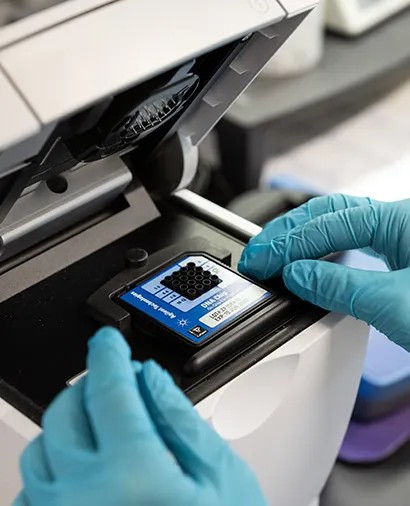
Sample prep and QC. Nucleic acid extraction, DNA and chromatin shearing, Bioanalyzer, and quantitation by Qubit and qPCR.
How long it takes
Times depend on the queue when you submit. As a guide:
RNA extraction, Bioanalyzer and quantitation: one week.
Library preparation: two to three weeks.
Sequencing on the NextSeq 2000: one week.
NovaSeq runs follow the queue at the UCSF Center for Advanced Technology.
Science that ran through the core
Papers that used the core span heart development, neuroinflammation, aging and gene regulation. A few examples:
Transcriptional profiling and therapeutic targeting of oxidative stress in neuroinflammation. Nature Immunology, 2020.
Single-cell analysis of cardiogenesis reveals basis for organ-level developmental defects. Nature, 2019.
Ketogenic diet reduces midlife mortality and improves memory in aging mice. Cell Metabolism, 2017.
Disease model of GATA4 mutation reveals transcription factor cooperativity in human cardiogenesis. Cell, 2016.
The Publications tab lists more, each with the service it used.
Start a project
Pick a service and press Request service. Describe your samples and what you want to learn. Once the core approves the request, the staff contact you to arrange the sample drop-off.
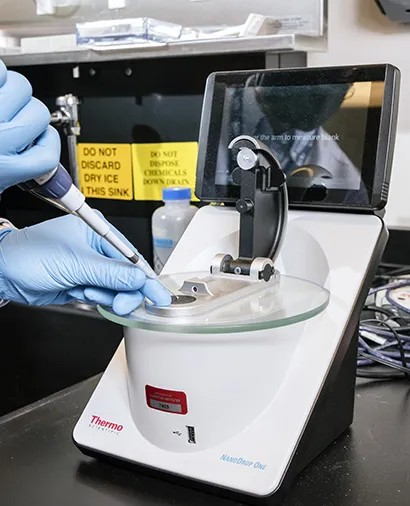
Run instruments yourself. After training with the staff, you can book the Bioanalyzer, Covaris S2, Qubit and NextSeq 2000. The NanoDrop is also available for researchers to use. Press Request training on any of them.
Credit the core. In your papers, thank the core by name, for example: "We thank [name] of the Gladstone Genomics Core for their assistance with [assay or project]." And let the core know when the work is published.
Contact the facility
Talk to the team about your research, access, or a visit.
Dropping off samples
Send your request first. Once the core approves it, the staff contact you to arrange the drop-off. Write to the core to schedule a consultation or training.